






















The Power of Policy in Shaping Society
Policy reform that supports disempowered people can enable thrivable societies. Thrivable societies occur when civil liberties, the democratic index, and human rights indices are increased. In order to establish effective policy approaches, governments need to be informed by a cross-section of the community, along with Systems Thinking from the micro level to the macro level, not just activism across certain areas. Additionally, the best data to guide effective legislation and regulations must be provided to policymakers, and informed by the best science and human rights policy. To achieve this, the information needs to be communicated effectively. The THRIVE Framework is a valuable tool in showcasing succinctly what needs to occur. Using the Foundational Focus Factor (FFF), Systems Thinking, and Context-Based Metrics clearly demonstrates what governments must do to establish effective policy approaches.
Who Are the Disempowered?
The disempowered within society are those without access to well-being or whose rights are in any way compromised. Empowerment through policy reform is essential for these groups. These include:
- People within marginalised communities with intergenerational socio-economic disadvantage
- The elderly and the youth
- People with disabilities or mental illness
- People convicted of crimes
- People from religious or ethnic minorities
- Women and other minority groups, including transgender or non-binary people (Oxford Review, 2025).
It is important to enable empowerment through policy reform.

Immigrants and refugees are a significant group facing disempowerment and marginalisation.
Source: pexels.com
Case Studies in Empowerment through Policy reform
Northern European nations, such as Germany and Norway, have implemented highly effective policy reforms aimed at empowering disempowered individuals. This can be seen in particular with those suffering with a mental illness, as well as those incarcerated. In these countries, therapy centred prisons exist, in which rehabilitation is the central focus. Prisoners convicted of crimes are empowered to rehabilitate and adopt new skills for the future (Brennan Centre for Justice, 2021). The central premise for these prisons is that progress towards rehabilitation and release is the central goal. Violence and assault are effectively mitigated, and prisoners are often granted day release as part of their rehabilitation. Reoffending is also mitigated and reduced. Norway once mirrored the United States’ approach to incarceration, but today it employs innovative strategies that have significantly reduced reoffending rates. (First Step Alliance, 2024).
Mental Health support approaches are also highly effective in such countries in a criminal justice context. Far more preventative measures are employed through effective social welfare programmes. Welfare state approaches can result in a reduction in crime rates (Rudolph & Starke, 2020). This is another example of empowerment through policy reform. Greater fostering of community engagement such as volunteering within communities is also central to this. This allows for safer, thriving communities, as is the existence of green cities to further facilitate social and community well-being (Australian Psychological Society, 2025; Roba et al., 2025).
Barriers to Policy Reform
Many larger structural factors can impede policy reform, as illuminated by Context-Based Metrics. Within parts of the developing world, marginalisation is often more widespread. Issues such as poverty or conflict affect communities. As such, while gender equality may not be a central priority, broader conditions amplify existing gender inequalities (Plan International Australia, 2024). Significant structural inequality already exists within the broader macroeconomic context. This occurs especially when access to resources for community well-being is inhibited by macroeconomic contexts. Some of these are even post-colonial agreements and their legacies (Dzukashu, 2021). Nonetheless, gender inequality still presents a major challenge regarding human rights in some developing countries.
Other factors are relevant in countries such as the United States, in which embedded structural and socio-economic stratification exists within police and criminal justice systems. Marginalised groups, such as those with a mental illness or disability, from low-socio-economic areas or ethnic minorities face significant issues when encountering institutions (Garland, 2023).

Previous and ongoing legacies of colonialism, resource extraction, and conflict zones still influence and amplify inequalities within parts of the global south.
Source: Danish Institute for International Studies
The Role of Civic Engagement
Civic engagement is central to community well-being and allowing effective influences upon policy. Different interest groups will, and have lobbied governments to address different social issues. In some cases, actions taken to support certain groups have inadvertently eroded the rights and civil liberties of others. Hence, why it is important for civic engagement to be encouraged by policymakers for broader groups to influence policy. This should especially be for marginalised groups such as the youth (Brady et al., 2020). Effective representation should exist across all areas in order for the community to advise policy makers in refining laws. This is on top of preliminary lobbying. Representation should exist across all areas, from disability and mental health advocacy to animal welfare, and across issues related to gender, prisoners, youth, refugees, and beyond.
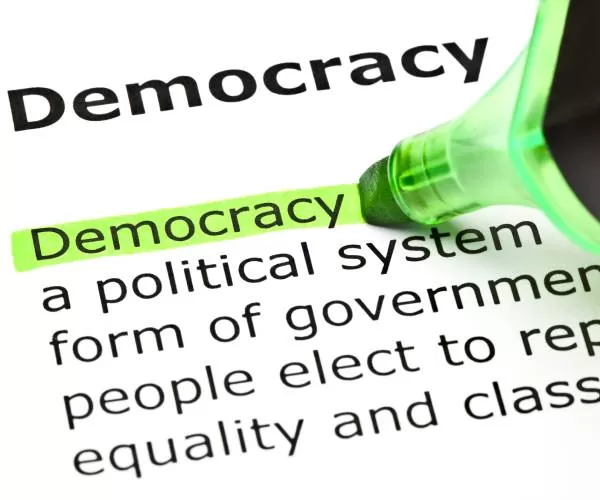
Greater civic engagement in influencing policymaking is adherent to representative, participatory, and deliberative democracy, and therefore should be encouraged.
Source: Newsmax.com
Building Inclusive Policy Frameworks
In mandating representation from all areas to guide policy, it is more likely that higher civil liberties can be enabled. By having such representatives guide committees and guide policy, less loopholes can occur. Lobbying for greater sentencing for heinous crimes has occurred by victim groups, but prisoner advocacy groups should also be equally listened to in the need for penal system reform. This is so that no human right or civil liberties are breached (The Sentencing Project, 2025). Similarly, in the case of gender inclusion, transgender groups at a recent supreme court ruling in the United Kingdom were not involved in providing evidence to determine the definition and distinction of gender recognition. This highlighted a major flaw in the process before the courts, and potential human right breaches (Thurlow, 2025). Policy should mandate in the same way as it has previously regarding statutes regarding the judiciary, that this should occur.
Other examples are areas such as religious freedoms and freedom of expression. If we look to look to increase civil liberties, freedom of speech, worship, or cultural practices should all be protected, as long as no breach of law in the form of violence, inciting hatred, or violence exists (United Nations Human Rights Office of the High Commissioner, 2025). This should broadly be implemented to ensure that this applies on an individualised and systemic basis.
Therefore having ample mandated representation to build effective policy frameworks is essential, to holistically and systemically take into account all areas, not just some lobby groups in isolation. This is where Systems Thinking is relevant, and whereby stakeholders across all areas need to be consulted.
Conclusion and Call to Action (CTA)
Policymakers must look to ensure that inclusive policies are holistic, and not just for some groups. Being inclusive of all is essential therefore in alignment with basic human rights. Any individual, should not be mistreated, disempowered, or have their most fundamental rights threatened. To do this, prioritising those who are most vulnerable and at most risk of harm or violence already is essential. By focusing on this, individuals can be empowered by the knowledge that, despite anything else, their fundamental well-being and rights are upheld by policymakers, and in adhering to this, this can pave the way towards effective change.
Achieving THRIVE goals
SDG16: Peace, Justice & Strong Institutions highlights the need for strong institutions, peace, and justice. Where institutions are compromised in any way, this can severely impact overall justice and the delivery of peace. SDG10: Reduced Inequalities focuses on reducing inequalities, and the need for inequalities between regions and within countries to be eliminated. Whether this is linked to intergenerational socio-economic status, ethnic or religious minority groups in some countries, or migrants who can face severe issues. The United Nations’ SDGs are set to conclude in 2030, meaning that further approaches are needed beyond this. This is where the THRIVE Framework fits in.
Context-Based Metrics and Systems Thinking are Foundational Focus Factors within the THRIVE Framework and are central to this issue. Context-Based Metrics highlights the varied cultural, social, economic, and political contexts surrounding inequality. It highlights how disadvantage and disempowerment must therefore be tackled. To consider context holistically is essential to evaluate what paths are needed to mitigate disadvantage and disempowerment. Varied structural and cultural factors intersect, demonstrating the need for systemic approaches. This can be seen in the context of embedded social and structural stratification along socio-economic lines, it can also be seen in the context of colonialism, war, and intergenerational trauma and mental health issues within micro systems.
This is where Systems Thinking also becomes highly relevant. By recognising that some examples of disempowerment are structural, institutional, and others are intergenerational or exist on a micro level, but effected by macro factors such as mental health, different approaches can be taken systemically to address these issues, whether these be at the macro or nano level. This occurs both at the policy level and at the grassroots level, in addressing socio-economic and institutional factors, right through to intergenerational and mental health factors on the individual and nano level.
A Thrivable Framework for empowerment through policy reform
THRIVE Project promotes thrivability, which goes beyond mere sustainability. Context-Based Metrics and Systems Thinking are core Foundational Focus Factors of the THRIVE Framework, which illuminate how policies can enable effective change for a thrivable future. THRIVE examines issues using holistic and systemic solutions by utilising the THRIVE Framework, which allows forward guidance toward a future that is thrivable. If you’d like to learn more about the Framework, you can read about it on the website or review our White Papers, Webinars, Podcasts, and other Workshop series. Sign up to our Newsletter for monthly updates.
Why trust us?
At THRIVE Project, we’re all about facts that matter—and a future that flourishes. Our team of researchers, writers, and thrivability experts dig deep into the science so you don’t have to. Everything we publish is based on credible sources, double-checked for accuracy, and written with one goal in mind: helping you make sense of the world and how to improve it. We’re independent, non-profit, and here to spark real change with knowledge you can count on. Find out more about our team.
– THRIVE Project